Portrait of researchers
News
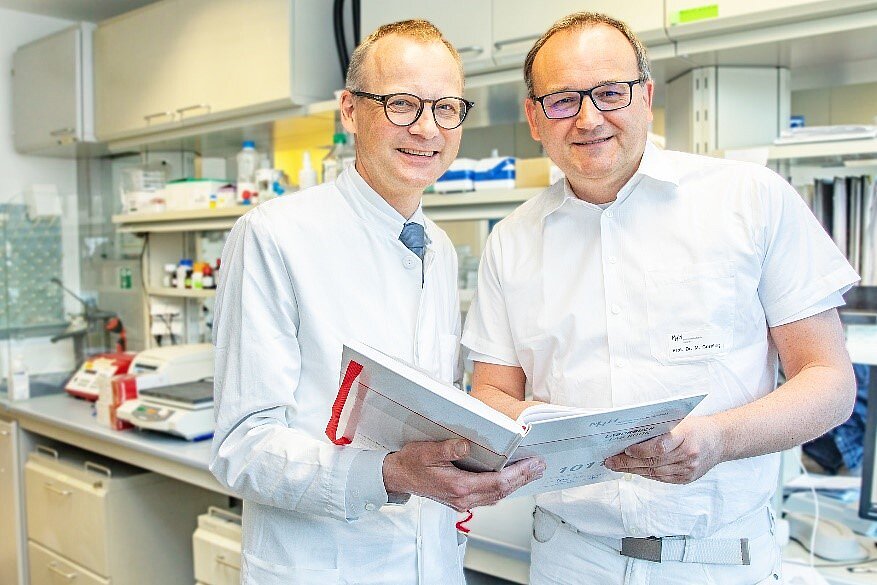
The list of “Highly-cited researchers” is published annually by Clarivate Analytics to honor scientists who have made a particularly significant impact in their fields. Five heads of department at the Helmholtz Centre for Infection Research (HZI) are among the honorees in 2023: bioinformaticians Prof Alice McHardy, Prof Yang Li and Prof Andreas Keller, biotechnologist Prof Marc Stadler and the Scientific Director of the HZI and geneticist Prof Josef Penninger were recognized for their scientific publications in the past year.
17.11.2023
News
It was previously believed that herpesviruses use certain body cells to replicate and other body cells to remain dormant, that is to remain inactive for a longer period of time. This dogma is now being questioned using the example of cytomegalovirus (CMV), a herpesvirus from the beta-herpesvirus subfamily, which can be fatal in immunocompromised transplant recipients. In a new study, scientists from the “Viral Immunology” department at the Helmholtz Centre for Infection Research (HZI) in Braunschweig have discovered that certain connective tissue cells (fibroblasts) are not only used by CMV for replication, as previously assumed. Apparently, CMV can also remain latent in the fibroblasts. The prevailing picture of an either/or - either the CMV uses a certain type of body cell for proliferation, or it remains in an inactive state there - is therefore no longer tenable. A second paradigm shift suggested by the study is the regulation of the CMV latency in cells: Apparently, the virus controls the use of fibroblasts as sites of latent or active infection not only via factors present in the cell, but also via an interaction with the immune system. The results were published in the renowned journal Nature Communications.
30.05.2023
Eine Probe
News
Infection with SARS-CoV-2 leads to severe disease in some people, whereas others do not get ill or only experience mild disease. What causes these differences is not fully understood. It is already known that an overactive innate immune system is causing severe COVID-19 disease, but it is unclear how this is regulated. A team led by Prof Yang Li, Director at the Centre for Individualised Infection Medicine (CiiM) and head of department “Computational Biology for Individualised Medicine” at the Helmholtz Centre for Infection Research (HZI), has come a step closer to answering this question. The researchers addressed the question to what extent the course of disease is genetically or epigenetically regulated. The CiiM is a joint initiative by the HZI and Hannover Medical School (MHH). In addition to Li, the team included other scientists from the HZI and the RESIST cluster of excellence.
23.02.2023
group picture
News
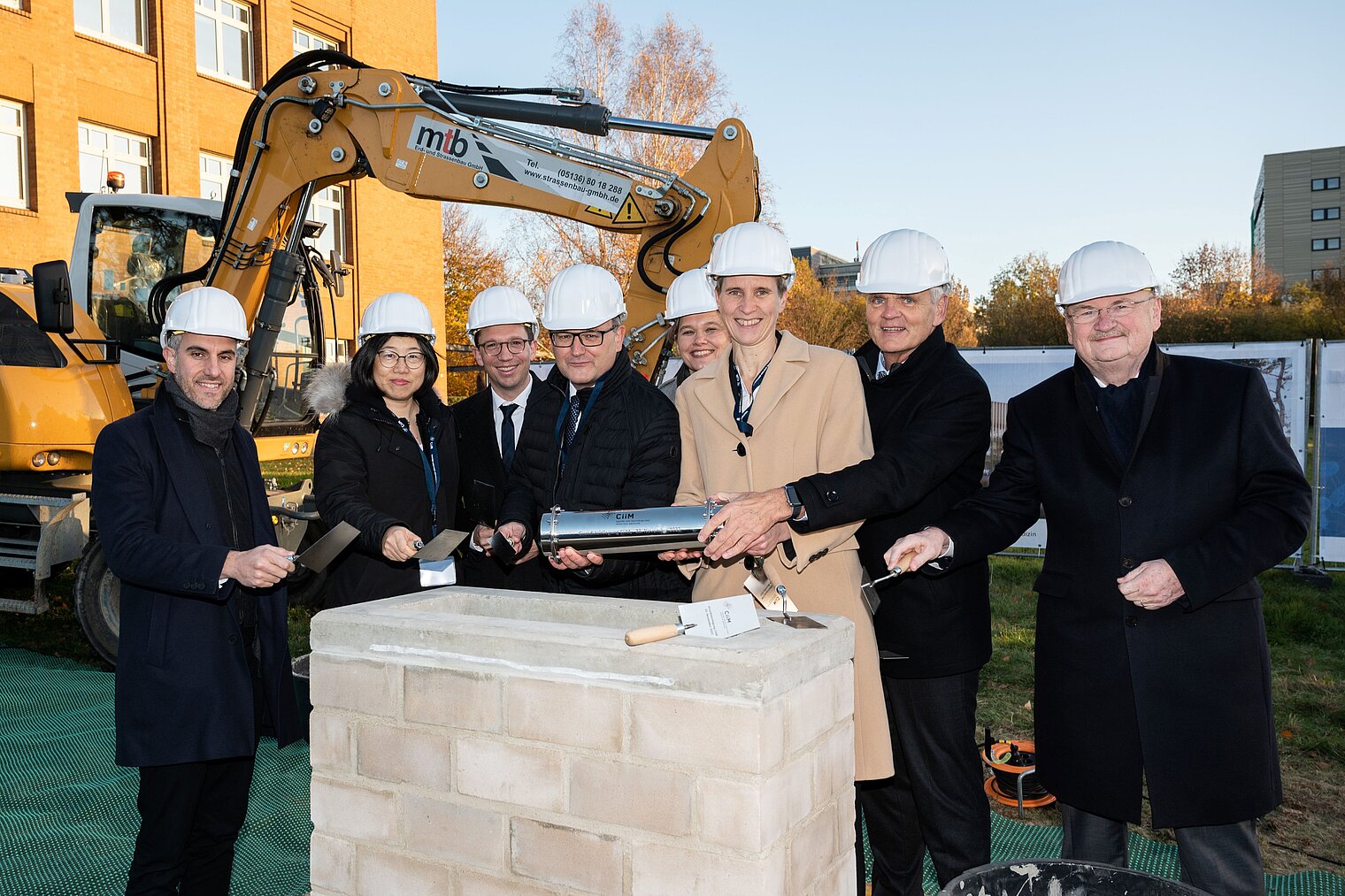
A dedicated building is being constructed in Hannover for the Centre for Individualised Infection Medicine (CiiM), a joint initiative of the Helmholtz Centre for Infection Research (HZI) and the Hannover Medical School (MHH). The groundbreaking ceremony for the new building with 2100 square metres of effective space was held today in the presence of numerous guests from politics and science. CiiM, which was initially founded in 2015 as a virtual centre, is addressing urgent challenges in infectious medicine with the aim of individual prognosis and diagnosis of infectious diseases and derived optimised and customised prevention and personalised therapy for the benefit of the individual patient. The construction costs are covered by the federal government, the state of Lower Saxony, the Helmholtz Association and the HZI.
23.11.2022
Group picture
News
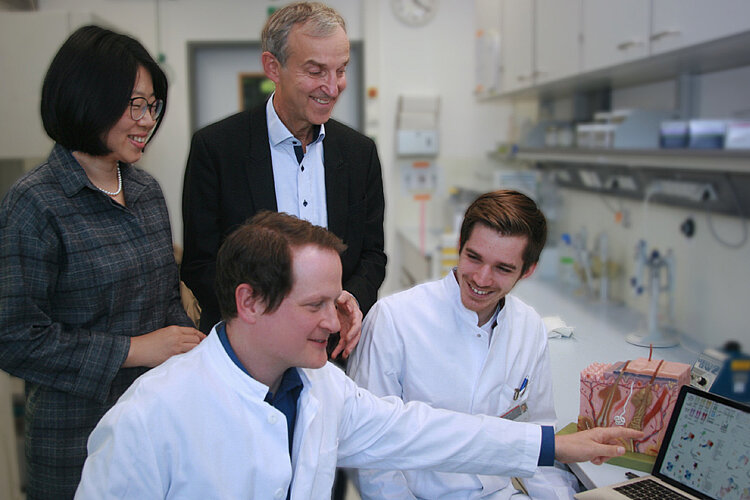
Many people suffer from neurodermatitis (atopic dermatitis) or psoriasis. These chronic inflammatory diseases, which have so far been incurable, can lead to a significant loss of quality of life due to the agonising itching and stigmatisation in severe forms. Researchers of the exzellence cluster RESIST have now gained a number of new insights with potential clinical relevance using state-of-the-art technologies such as T-cell receptor and single-cell RNA sequencing based on skin biopsies and blood samples from patients. They have published these in the journal Allergy, currently the leading publication in the field of allergology, in two articles. The main authors include Dr Bowen Zhang from the research group of Prof Yang Li, Centre for Individualised Infection Medicine (CiiM) and TWINCORE - Centre for Experimental and Clinical Infection Research, and Dr Lennart Rösner and Dr Stephan Traidl from the team of Prof Thomas Werfel, Clinic for Dermatology, Allergology and Venereology at Hanover Medical School (MHH). The CiiM and TWINCORE are joint institutions of the Helmholtz Centre for Infection Research (HZI) in Braunschweig and MHH.
13.10.2022
Group picture
News
Hepatitis D is by far the most severe form of chronic viral hepatitis frequently leading to liver failure, hepatocellular carcinoma and death. However, there is very limited knowledge on disease pathophysiology and host-virus interactions explaining the large interindividual variability in the course of hepatitis D. Hannover Medical School (MHH) with its Department of Gastroenterology, Hepatology and Endocrinology and its Centre for Individualised Infection Medicine (CiiM), a joint institution of MHH and the Helmholtz Centre for Infection Research (HZI) in Braunschweig, coordinates an international project for an unbiased screening of a large multicenter cohort of well-defined HDV-infected patients to better understand individual factors determining the outcome of infection and to identify subjects benefitting from currently available treatments. In a highly competitive call for proposals, the D-SOLVE consortium (“Understanding the individual host response against Hepatitis D Virus to develop a personalized approach for the management of hepatitis D”) has received four-year funding of 6.75 million euros from the Horizon 2020 EU Horizon Call „Personalised medicine and infectious diseases: understanding the individual host response to viruses (e.g. SARS-CoV-2)“ of the European Union. In addition to the MHH as project partner and coordinator, institutions from Germany, France, Italy, Sweden and Romania are involved in the project.
22.06.2022