Immunotherapy against hepatitis B
News
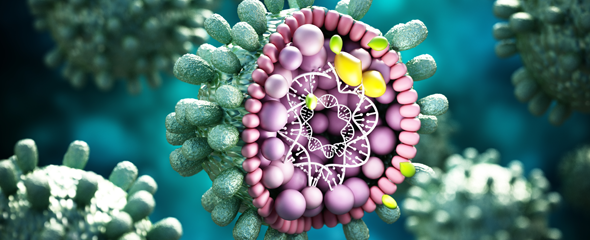
Hepatitis B is a viral infection of the liver that can lead to cancer and organ failure. Antiviral therapies can suppress the infection, but a functional cure is rare. Novel immunotherapies may lead to an actual cure more often. However, it is still unclear which patients benefit most from these new therapies. Researchers at the Centre for Individualised Infection Medicine (CiiM), a joint institution of the Helmholtz Centre for Infection Research (HZI) and the Hannover Medical School (MHH), as well as the MHH and the German Center for Infection Research (DZIF), have now identified a biomarker that intends to enable predictions about the success of the therapy. The results were published in the scientific journal Gut.

25.11.2021
Infection and immunity week
News
The Helmholtz Centre for Infection Research (HZI) in Braunschweig and the McGill Interdisciplinary Initiative in Infection and Immunity (MI4) at McGill University in Montréal, Canada, are organising a joint symposium on personalised infection medicine on 29 November. Three researchers from each of the two institutions will give lectures on various topics of personalised infection medicine. The keynote lecture will be given by Prof Ugur Sahin, co-founder and CEO of BioNTech SE. The symposium kicks off McGill University's “Infection and Immunity Week”, which celebrates its 200th anniversary this year. Interested scientists can register to follow the event online.
23.11.2021
Arme und Hände die auf einer Tastatur liegen
News
Welche Faktoren sind verantwortlich dafür, dass einige Menschen nach einer Infektion mit dem Coronavirus SARS-CoV-2 schwer erkranken, während andere nur leichte oder gar keine Symptome entwickeln? Dieser Frage gehen Wissenschaftlerinnen und Wissenschaftler in einem internationalen Zusammenschluss namens „COVID-19 Host Genomics Initiative“ nach. Neben Rauchen und Übergewicht als Risikofaktoren für einen schweren COVID-19-Verlauf hat das Forschungsteam auch genetische Faktoren im menschlichen Erbgut gefunden, die offenbar eine wichtige Rolle spielen. An der weltweiten Zusammenarbeit ist auch die Medizinische Hochschule Hannover (MHH) mit Gruppen des CiiM beteiligt. Sie hat Bioproben und Daten aus ihrer „COVID-19-Kohorte“ beigesteuert, einem vom Niedersächsischen Ministerium für Wissenschaft und Kultur (MWK) mit mehr als zwei Millionen Euro unterstützten Forschungsprojekt. Die ersten Ergebnisse aus den Untersuchungen des weltweiten Forschungsverbundes sind jetzt in der Fachzeitschrift Nature veröffentlicht.
09.07.2021