CAIMed Group 1b: AI and Bioinformatics
Head
Research focus
Personalized medicine is gaining increasing importance in medical research, as personalized treatment approaches tailored to the specific needs and genetic profiles of individual patients can lead to optimized outcomes. In this context, diverse datasets play a central role—ranging from genetic information to other multi-omics data and clinical data. These data come from various sources and often encompass different formats and structures, making their integration a significant challenge. Currently, there is often a lack of efficient methods to meaningfully combine and analyze these heterogeneous datasets.
However, this research group, which brings together experts from the fields of life sciences, computer science, AI, and medicine, provides an ideal foundation to address this complexity. Our goal is to examine the datasets for both their clinical and methodological rigor. AI methods will then be used to integrate the resulting datasets and make them available for larger AI algorithms and models for data processing (e.g. other groups within CAIMed like Group 1c).
Research focus
Personalized medicine is gaining increasing importance in medical research, as personalized treatment approaches tailored to the specific needs and genetic profiles of individual patients can lead to optimized outcomes. In this context, diverse datasets play a central role—ranging from genetic information to other multi-omics data and clinical data. These data come from various sources and often encompass different formats and structures, making their integration a significant challenge. Currently, there is often a lack of efficient methods to meaningfully combine and analyze these heterogeneous datasets.
However, this research group, which brings together experts from the fields of life sciences, computer science, AI, and medicine, provides an ideal foundation to address this complexity. Our goal is to examine the datasets for both their clinical and methodological rigor. AI methods will then be used to integrate the resulting datasets and make them available for larger AI algorithms and models for data processing (e.g. other groups within CAIMed like Group 1c).
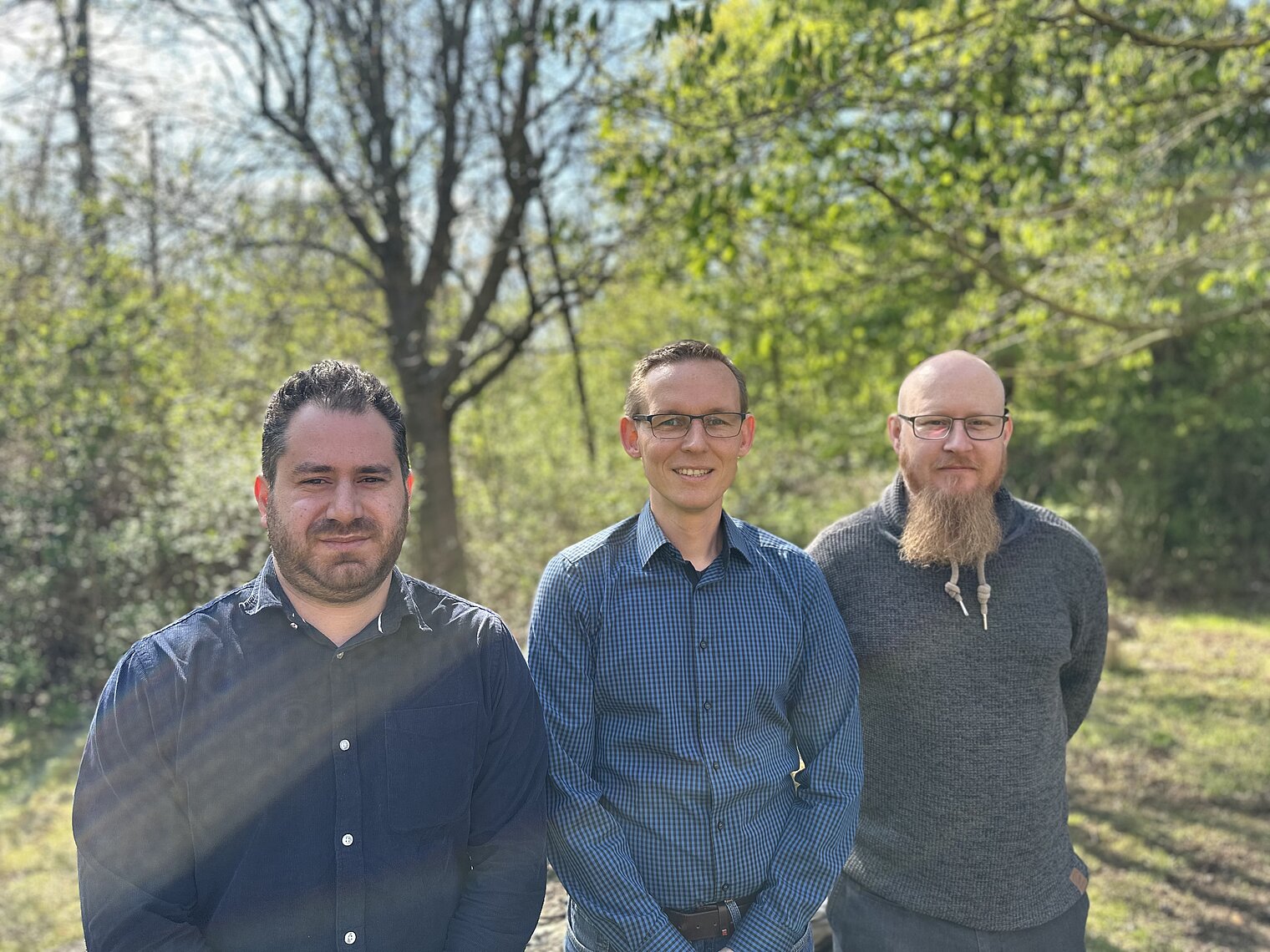
People working in the junior research group are:
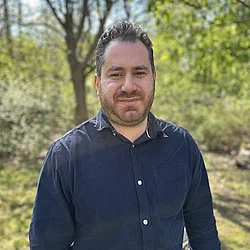
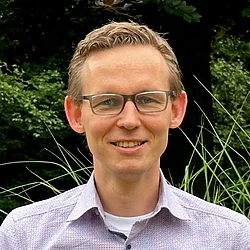
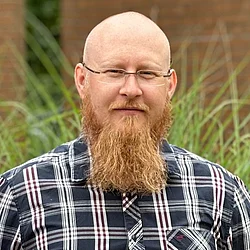
Dr. Maximilian Schieck is a member of the Hannover Unified Biobank, led by Prof. Thomas Illig. He is the spokseperson of the CAIMed junior research group “AI and Bioinformatics”. He has a extensive experience in population-based association studies in combination with functional gene analysis. His motivation is to improve patients care on the basis of profound data paired with cutting-edge AI-supported research.
Dr. Sebastian Klein is part of Prof. Markus Cornberg’s team at the CiiM. He has a background in establishing and refining molecular analyses techniques, mainly transcriptomics and proteomics. He has supervised many single-cell sequencing projects and upholds critical reviewing and assessment of quality of a broad spectrum of data sets, which is crucial for later data integration and use of data within CAIMed.
Dr. Mohamad Ballan is part of Prof. Yang Li’s team at the CiiM. He has a background in multi-omics data analysis, with expertise in genomic, epigenomic, and transcriptomic data integration. His work is crucial for data integration and use within the CAIMed framework.
Research projects
The working group is currently being established, and already approved projects include the BMBF-funded FEDCOV and AID-PAIS, which were applied for in close collaboration with other CAIMed partners. In total, more than €1.7 million in funding was secured. The FEDCOV project will focus on the establishment and use of federated learning models on decentralized long-/post-COVID datasets to investigate the pathogenesis of long-/post-COVID. Federated learning models are a promising method to meet current data protection requirements while simultaneously providing data for sophisticated machine learning analysis methods. The project name AID-PAIS stands for AI-driven integration of multimodal omics and clinical data to gain a better understanding of post-acute infection syndromes. In this project, deep learning and foundation models are among the key focuses, aiming to better identify specific biomarkers and/or molecular signatures of post-acute infection syndromes and to determine patient-specific subtypes.
Mentors
The group is supported by the mentors Prof. Thomas Illig, Prof. Markus Cornberg, Prof. Yang Li.
Publications
- Niehaus C, Klein S, Strunz B, Freyer E, Maasoumy B, Wedemeyer H, et al. CXCR6+CD69+ CD8+ T cells in the ascites are associated with disease severity in patients with liver cirrhosis. JHEP Reports. 2024 Jun 1;6(6):101074–4. DOI: 10.1016/j.jhepr.2024.101074
- Liu Z, Crișan TO, Qi C, Gupta MK, Liu X, Moorlag SJCFM, Koeken VACM, de Bree LCJ, Mourits VP, Gao X, Baccarelli A, Schwartz J, Pessler F, Guzmán CA, Li Y, Netea MG, Joosten LAB, Xu CJ. Sex-specific epigenetic signatures of circulating urate and its increase after BCG vaccination. Res Sq [Preprint]. 2024 Jul 22; DOI: 10.21203/rs.3.rs-4498597/v1. PMID: 39108482