

Computational Biology for Infection Research

Research focus
The primary objective of our research at the CiiM is to establish data-driven computational approaches that further advance individualized infection medicine in the clinics, such as methods that more comprehensively and rapidly identify the relevant pathogens from infected patient samples than what is possible with today’s clinical routine. To this end, we are working innovative technologies combining both experimental and computational analyses using high-throughput sequencing of patient samples. This approach allows for direct detection and characterization of pathogens from complex samples, enabling their rapid and accurate identification. Additionally, we are interested in studying pathogen-host interactions, characterizing their antimicrobial resistances, virulence factors and in exploring the dynamics of microbial communities in the context of infectious disease progression.
Research focus
The primary objective of our research at the CiiM is to establish data-driven computational approaches that further advance individualized infection medicine in the clinics, such as methods that more comprehensively and rapidly identify the relevant pathogens from infected patient samples than what is possible with today’s clinical routine. To this end, we are working innovative technologies combining both experimental and computational analyses using high-throughput sequencing of patient samples. This approach allows for direct detection and characterization of pathogens from complex samples, enabling their rapid and accurate identification. Additionally, we are interested in studying pathogen-host interactions, characterizing their antimicrobial resistances, virulence factors and in exploring the dynamics of microbial communities in the context of infectious disease progression.
Working in the interdisciplinary environment with strong translational focus of the CIIM provides us with exciting and truly unique opportunities to create innovative technologies that will improve the medical treatments for patients with infectious diseases.
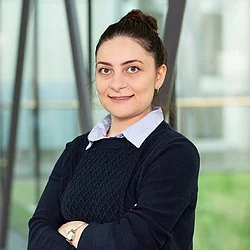
Since 2014, Alice McHardy leads the Department of “Computational Biology for Infection Research” at the Helmholtz Centre for Infection Research (HZI) and is a full professor in the Carl-Friedrich-Gauss Department and Department of Life Sciences at the Technical University of Braunschweig, Germany.
Alice Carolyn McHardy holds a diploma in biochemistry and a doctoral degree (Dr. rer. nat) in bioinformatics, both from Bielefeld University in Germany. From 2005 to 2007 she first was a postdoc and then a permanent staff member in the Bioinformatics and Pattern Discovery Group at the IBM T.J. Watson Research Center in Yorktown Heights, USA.
From 2007 to 2012 she led the independent research group for Computational Genomics and Epidemiology at the Max Planck Institute of Computer Science in Saarbrücken. In 2010, she was appointed Chair of Algorithmic Bioinformatics at Heinrich Heine University Düsseldorf.
Alice McHardy has been recognized as a Highly Cited Researcher by Clarivate since 2020 and is co-organizer of the CAMI, the initiative for the Critical Assessment of Metagenome Interpretation, a community-driven initiative promoting the establishment of best practices in computational metagenomics by organizing benchmarking challenges for the field.
Research project
Individualized Prevention and Treatment of Infections in Patients with Liver Cirrhosis
is a collaborative research initiative between Hannover Medical School (MHH), the Helmholtz Centre for Infection Research (HZI), and the Technical University of Braunschweig (TUBS). Bringing together expertise from clinical medicine, microbiology, immunology, bioinformatics, and computational data science, the project aims to develop personalized prevention, diagnostic, and treatment strategies for infections in patients with liver cirrhosis, a highly vulnerable patient group with increased risk of severe infections, immune dysfunction, and high mortality. By integrating clinical data, immune profiling, microbiome and pathogen analyses, and advanced AI-based computational models, INDIVO seeks to identify individual infection risk profiles, improve rapid pathogen detection, and enable targeted antimicrobial therapies, ultimately contributing to a translational precision medicine framework for improved patient care and outcomes.



Publications
1. Meyer, F., Fritz, A., Deng, Z.L., Koslicki, D., Lesker, T.R., Gurevich, A., Robertson, G., Alser, M., Antipov, D., Beghini, F.,…, McHardy, A.C., et al. (2022). Critical Assessment of Metagenome Interpretation: the second round of challenges. Nat Methods 19, 429-440. 10.1038/s41592-022-01431-4 Critical Assessment of Metagenome Interpretation: the second round of challenges | Nature Methods
2. Fritz, A., Bremges, A., Deng, Z.L., Lesker, T.R., Götting, J., Ganzenmueller, T., Sczyrba, A., Dilthey, A., Klawonn, F., and McHardy, A.C. (2021). Haploflow: strain-resolved de novo assembly of viral genomes. Genome Biol 22, 212. 10.1186/s13059-021-02426-8 Haploflow: strain-resolved de novo assembly of viral genomes | Genome Biology | Full Text (biomedcentral.com)
3. Khaledi, A., Weimann, A., Schniederjans, M., Asgari, E., Kuo, T.H., Oliver, A., Cabot, G., Kola, A., Gastmeier, P., Hogardt, M., McHardy, A.C., Häussler, S., et al. (2020). Predicting antimicrobial resistance in Pseudomonas aeruginosa with machine learning-enabled molecular diagnostics. EMBO Mol Med 12, e10264. 10.15252/emmm.201910264 Predicting antimicrobial resistance in Pseudomonas aeruginosa with machine learning‐enabled molecular diagnostics | EMBO Molecular Medicine (embopress.org)
4. Sczyrba, A., Hofmann, P., Belmann, P., Koslicki, D., Janssen, S., Dröge, J., Gregor, I., Majda, S., Fiedler, J., Dahms, E.,…, McHardy, A.C. (2017). Critical Assessment of Metagenome Interpretation-a benchmark of metagenomics software. Nat Methods 14, 1063-1071. 10.1038/nmeth.4458 Critical Assessment of Metagenome Interpretation—a benchmark of metagenomics software | Nature Methods
5. Zhi-Luo Deng, Nasim Safaei, Alice C. McHardy, Metax enables accurate cross-domain metagenomic profiling across sample types, Cell (in press).
6. Zhi-Luo Deng, Nasim Safaei, Sarah Schütte, Valerie Ohlendorf, Benjamin Maasoumy, Alice C. McHardy. High prevalence and local dissemination of daptomycin-resistance mutations for Enterococcus faecium in cirrhotic patients. Gastroenterology (2026). https://doi.org/10.1053/j.gastro.2025.08.046
7. Kaixin Hu, Fernando Meyer, Zhi-Luo Deng, Ehsaneddin Asgari, Tzu-Hao Kuo, Philipp C. Münch, Alice C. McHardy. Assessing computational predictions of antimicrobial resistance phenotypes from microbial genomes. Briefings in Bioinformatics (2024). https://doi.org/10.1093/bib/bbae206
Further information
For further information on projects, openings or collaboration inquiries from clinicians, please contact Alice McHardy.
Newsroom