
Clinical Bioinformatics

Focus
The Clinical Bioinformatics research group develops computational and statistical methods to investigate the molecular mechanisms underlying infectious diseases, immune responses, and biological aging. Our research focuses on epigenetic regulation, particularly DNA methylation, and its role in disease susceptibility, vaccine responses, healthy aging, and multimorbidity. By integrating population-scale multi-omics data, including epigenomics, transcriptomics, and clinical data, we identify molecular biomarkers and develop predictive models for disease risk, early detection, and patient stratification. Ultimately, our goal is to advance precision medicine through improved molecular characterization of individuals and patient populations.
Focus
The Clinical Bioinformatics research group develops computational and statistical methods to investigate the molecular mechanisms underlying infectious diseases, immune responses, and biological aging. Our research focuses on epigenetic regulation, particularly DNA methylation, and its role in disease susceptibility, vaccine responses, healthy aging, and multimorbidity. By integrating population-scale multi-omics data, including epigenomics, transcriptomics, and clinical data, we identify molecular biomarkers and develop predictive models for disease risk, early detection, and patient stratification. Ultimately, our goal is to advance precision medicine through improved molecular characterization of individuals and patient populations.
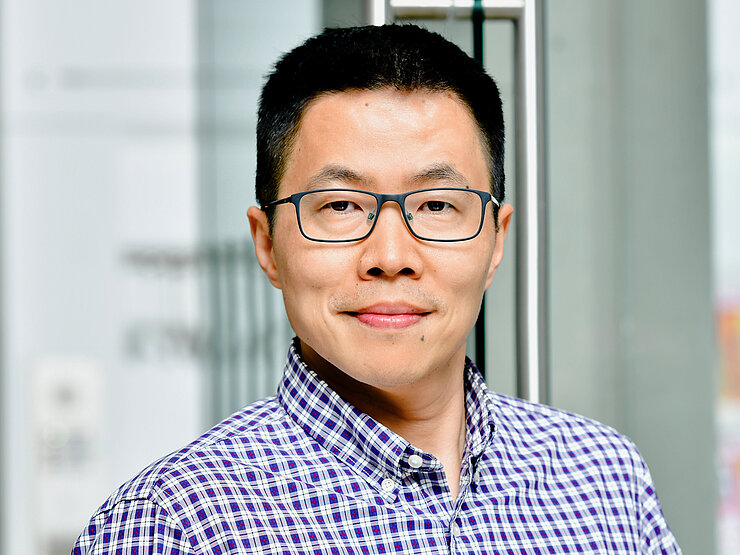
Prof. Dr. Cheng-Jian Xu is Professor of Clinical Bioinformatics at CiiM and Hannover Medical School (MHH). His research focuses on understanding how genetic, epigenetic, and environmental factors shape immune responses, infectious diseases, and biological aging.
By integrating multi-omics, clinical, and population data, his group develops computational approaches to identify biomarkers, predict disease risk, and advance precision medicine. Through interdisciplinary collaborations, he aims to translate data-driven discoveries into improved strategies for disease prevention, diagnosis, and treatment.
Projects
Immune Aging: Molecular Determinants and Clinical Consequences
Aging is accompanied by profound changes in the immune system that contribute to increased susceptibility to infections, chronic inflammation, and age-related diseases. However, the molecular mechanisms underlying immune aging and their impact on health remain incompletely understood.
This project investigates the genetic, epigenetic, and environmental factors that drive immune aging by integrating large-scale multi-omics, clinical, and population-based data. Using advanced computational and artificial intelligence approaches, we study how age-related molecular changes influence immune function, biological age, and multimorbidity. Our goal is to identify biomarkers and predictive models that support early risk assessment and precision medicine strategies for healthy aging.
Selected publications
- Liu Z, et al., Xu C-J, Netea MG. Interferon-related inflammaging links epigenetic age acceleration to multimorbidity. Cell Genomics 6, 101218 (2026).
- Oltmanns C, et al., Xu C-J*, Cornberg M*. Reverse inflammaging: Long-term effects of HCV cure on biological age. Journal of Hepatology 78, 90–98 (2023).
Funding: Lower Saxony Ministry of Science and Culture (MWK), Sprunginnovation Fund
Risk Assessment: AI-Driven Prediction of Disease Susceptibility and Health Outcomes
Complex diseases result from interactions between genetic, epigenetic, environmental, and lifestyle factors. Advances in multi-omics technologies provide unprecedented opportunities to characterize these interactions and improve disease prediction.
This project develops artificial intelligence and machine learning approaches to integrate large-scale multi-omics, clinical, and environmental data. By leveraging genomic, epigenomic, transcriptomic, and other molecular profiles, we identify biomarkers and develop predictive models for disease susceptibility, vaccine responses, and clinical outcomes. Our goal is to enable early risk assessment, patient stratification, and personalized prevention and treatment strategies.
Selected publications
- Qi C, et al., Xu C-J. Long-term DNA methylation changes mediate heterologous cytokine responses after BCG vaccination. Genome Biology (2025).
- van Breugel M, et al., Xu C-J. Nasal DNA methylation at three CpG sites predicts childhood allergic disease. Nature Communications 13, 7415 (2022).
Funding: German Research Foundation (DFG)




Selected publications
1. Liu Z, et al., Xu C-J, Netea MG. Interferon-related inflammaging links epigenetic age acceleration to multimorbidity. Cell Genomics 6, 101218 (2026).
2. Qi C, et al., Xu C-J. Long-term DNA methylation changes mediate heterologous cytokine responses after BCG vaccination. Genome Biology (2025).
3. Gupta MK, et al., Xu C-J. DNA methylation landscapes of HIV controllers: an epigenome-wide association study. EBioMedicine (2025).
4. Oltmanns C, et al., Xu C-J*, Cornberg M*. Reverse inflammaging: Long-term effects of HCV cure on biological age. Journal of Hepatology 78, 90–98 (2023).
5. van Breugel M, et al., Xu C-J. Nasal DNA methylation at three CpG sites predicts childhood allergic disease. Nature Communications 13, 7415 (2022).
A complete list of Cheng-Jian Xu's publications can be found on Google Scholar.
Newsroom